
TL;DR
- We are in the midst of an AI boom, where rapid advancements in artificial intelligence are transforming how we interact with one another, both online and in the real world.
- To make sense of the future, we must look to the leaders shaping this revolution and make strategic moves to persevere and adapt.
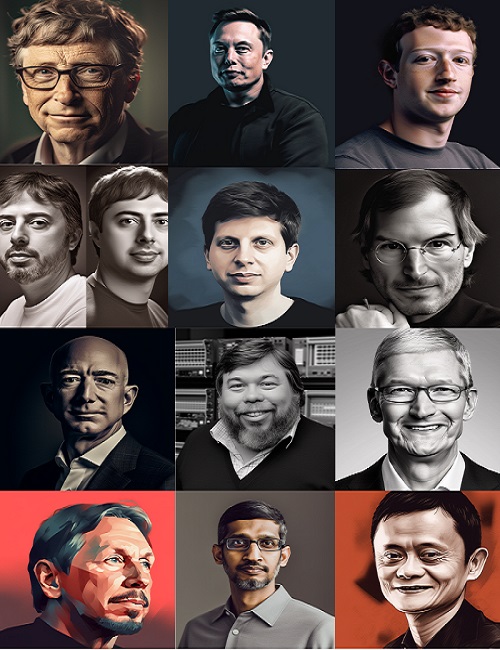
- Some top tech leaders to follow today include:
- Sam Altman, CEO of OpenAI
- Jeff Bezos, Founder of Amazon
- Tim Cook, CEO of Apple
- Larry Page and Sergey Brin, Co-Founders of Google
- Larry Ellison, Founder of Oracle
- Bill Gates, Co-Founder of Microsoft
- Steve Jobs and Steve Wozniak, Co-Founders of Apple
- Jack Ma, Founder of Alibaba
- Elon Musk, Founder of Tesla and SpaceX
- Sundar Pichai, CEO of Google
- Mark Zuckerberg, Founder of Facebook
- Businesses in the 21st century must remain flexible and learn to adopt AI within their workflows.
Why You Can’t Stop Hearing About AI
In 2025, many industry professionals began to recognize that we’re living through an “AI boom.” Artificial intelligence is woven into nearly every new device, software release, and creative design, and with each advancement, we walk a delicate line and take on a new layer of responsibility.
If you’re an average citizen, you’ve probably noticed the ripple through everyday language processors and chatbots. You’ve seen AI show up in offices and completely transform long, tedious tasks. For businesses, this boom is a double-edged IT solution: risk and possibility, precision and chaos.
One thing is certain: a vast, expanding power has landed in our laps, and what we choose to do with it in these early days will shape our collective future. Whether you’re cautious or all in, you can’t afford to ignore it.
At the front of this movement stand a select group of tech leaders who are pushing AI into our phones, laptops, and workplaces. By looking to them, we can understand where the technology is heading and how to prepare for the changes already unfolding.
Read on to learn more about what the top leaders in AI technology have to say about its adoption.
Before We Begin
1. We couldn’t include everyone
Countless tech innovators and leaders could have been included on this list. We had to draw the line somewhere, so we focused on twelve who have clearly made a significant impact on the industry.
2. This list is not ranked by influence
We don’t want anyone to assume we were placing one innovator above another. To keep things neutral and clear, we listed them in alphabetical order.
3. The opinions and quotes are their own
We believe artificial intelligence is here to stay in one form or another. But like every internet-connected technology, it comes with its own set of risks.
This article isn’t about our viewpoint. It’s about what some of the most influential technology innovators on the planet think about AI. We’ve done the legwork for you: who they are, how they’re involved in AI, what their predictions look like, and the quotes that reflect their perspective.
Some of it may surprise you, and some of it may not.
Either way, here it is: their thoughts, their words, and their predictions. Let’s take a look at what the world’s leading tech figures really think about AI.
1. Sam Altman, CEO of OpenAI (ChatGPT

Netflix took 41 months to reach one million users.
Facebook took 10 months to reach 1 million users.
Instagram took 2.5 months to reach 1 million users.
ChatGPT took 5 days.
Background and History
Sam Altman is the former president of Y Combinator, a leading startup accelerator, and the current CEO of OpenAI. His influence in the tech industry comes from his support and investment in numerous AI and technology startups, propelling them to success.
Born in 1985, he grew up in St. Louis, Missouri, and later attended Stanford University, where he studied computer science.
Altman left Stanford to found Loopt, a location-based social networking app, which was eventually acquired by Green Dot Corporation in 2012.
In 2014, Sam Altman took on the role of president at Y Combinator, a leading startup accelerator that nurtured successful companies such as Airbnb, Dropbox, and Reddit. Under his leadership, Y Combinator expanded its reach and continued to support innovative startups.
Altman stepped down as the president of Y Combinator in 2019 to focus on OpenAI, a research organization he co-founded with Elon Musk, Ilya Sutskever, Greg Brockman, and Wojciech Zaremba in 2015. Today, he is arguably one of the most influential tech leaders.
OpenAI: Altman’s Contribution to AI
Altman co-founded OpenAI, an organization dedicated to developing safe and beneficial AI. OpenAI ensures that artificial general intelligence (AGI) serves humanity’s best interests, emphasizing long-term safety and collaboration.
He made significant contributions to the field of AI, primarily through his leadership and involvement in OpenAI. Some of his key contributions include:
- Co-founded OpenAI
- Promoting AI safety and ethics
- Supporting AI research and development
- Building partnerships and collaborations
- Raising awareness of AI’s societal impact
Sam Altman’s Quotes and Predictions on AI
Sam Altman is a strong advocate for AI’s responsible and ethical development, emphasizing the importance of ensuring that AI benefits everyone.
- “If AI can do most jobs better than humans, we need to figure out how to share those resources so everyone has a good life.”
- “The AI community needs to take AI safety seriously before it’s too late, but if we do that, we can make AGI safe.”
- “AI will have a broad societal impact before AGI, and we strive to lead in areas directly aligned with our mission and expertise.”
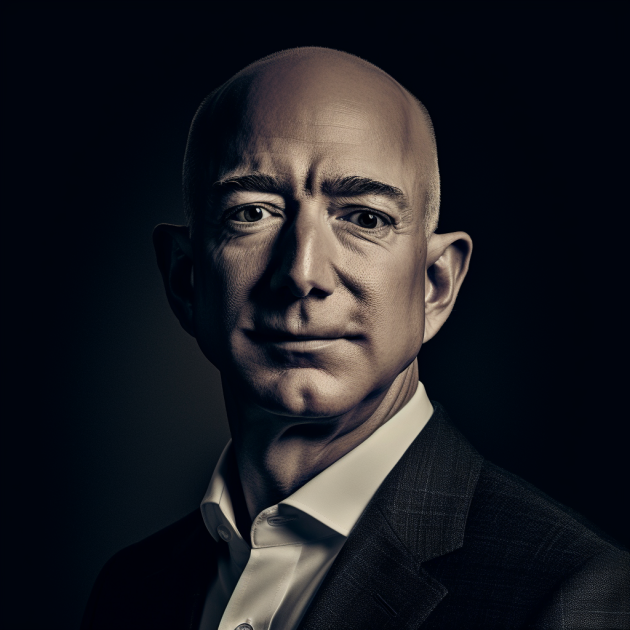
2. Jeff Bezos – Founder of Amazon
Background and History
Jeff Bezos, born in 1964 in Albuquerque, New Mexico, is a renowned tech leader, entrepreneur, and investor best known as the founder and former CEO of Amazon.
Bezos graduated from Princeton University in 1986 with an electrical engineering and computer science degree. After working on Wall Street for several years, Bezos founded Amazon in 1994, initially as an online bookstore.
Under Bezos’s leadership, Amazon expanded rapidly and diversified its product offerings, eventually becoming the world’s largest online marketplace and one of the most valuable companies globally. Bezos stepped down as Amazon’s CEO in 2021, transitioning to the role of Executive Chair.
Amazon’s AI Integration: Revolutionizing E-commerce
Amazon has been at the forefront of integrating AI technologies into its services, driven by Bezos’s vision and leadership. Some key AI-driven advancements within Amazon include:
- Personalized recommendations: Amazon uses AI algorithms to analyze customer behavior and provide personalized product recommendations.
- Alexa: Amazon’s AI-powered voice assistant, Alexa, has become a popular household name, enabling users to access information, control smart devices, and interact with various services using voice commands.
- Amazon Go: AI-powered computer vision, sensor fusion, and deep learning technologies enable Amazon Go stores to provide a cashier-less shopping experience.
- Robotics and automation: Amazon uses its warehouses’ AI-driven robots and automation systems to optimize logistics and improve efficiency.
Jeff Bezos’s Thoughts on AI: Quotes and Predictions
Jeff Bezos has expressed his optimism and belief in the potential of AI to drive innovation and improve various aspects of human life. Here are some notable quotes and predictions from Bezos:
- “We are now solving problems with machine learning and artificial intelligence that were in the realm of science fiction for the last several decades.”
- “It’s hard to overstate how big of an impact AI will have on society over the next 20 years.”
- “Machine learning and AI will empower and improve every business, every government organization, every philanthropy.”
Bezos envisions a future where AI technologies are ubiquitous and integrated into various aspects of daily life, driving innovation and transforming industries. As the founder of Amazon and a key global leader in technology, Bezos’s influence on AI adoption and development is undeniable.
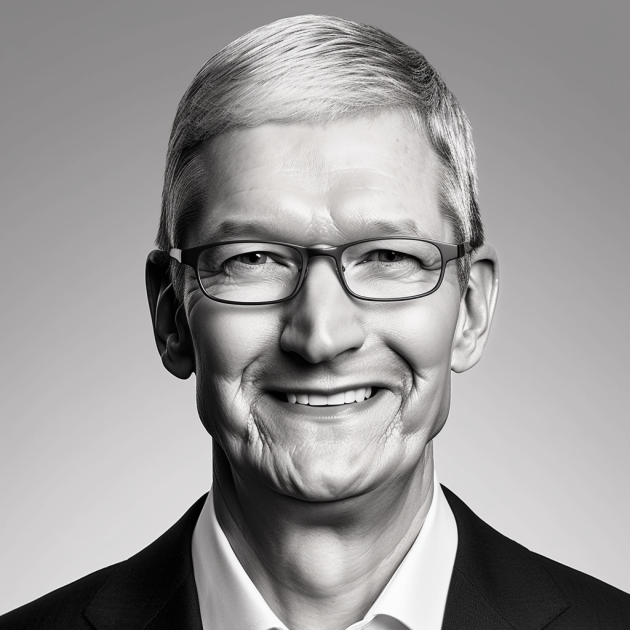
3. Tim Cook – CEO of Apple
Background and History
Tim Cook, born in 1960 in Mobile, Alabama, is a prominent business executive and the current CEO of Apple Inc. Cook earned a Bachelor of Science in Industrial Engineering from Auburn University and an MBA from Duke University’s Fuqua School of Business.
Before joining Apple in 1998 as Senior Vice President for Worldwide Operations, Cook held leadership positions at IBM and Compaq. In August 2011, Cook was named CEO of Apple, succeeding the company’s co-founder, Steve Jobs.
Under Cook’s leadership, Apple has continued to innovate and expand its product offerings, maintaining its status as one of the world’s most valuable companies.
Apple’s AI Integration: Driving Innovation
Under Tim Cook’s leadership, Apple has been integrating AI technologies into its products and services. Some key AI-driven advancements within Apple include:
- Siri: Apple’s AI-powered voice assistant, Siri, enables users to access information, control smart devices, and interact with various services using voice commands.
- Machine learning: Apple uses machine learning algorithms to improve the performance and functionality of its devices, such as enhancing image processing in the iPhone’s camera, optimizing battery life, and providing personalized recommendations in Apple Music and the App Store.
- Core ML: Apple’s Core ML framework allows developers to integrate machine learning models into their iOS, macOS, watchOS, and tvOS applications, promoting the development of AI-powered apps and services.
Tim Cook’s Thoughts on AI: Quotes and Predictions
Tim Cook has expressed his optimism about the potential of AI technologies to improve people’s lives and drive innovation across industries. Here are some notable quotes and predictions from Cook:
- “Autonomy is incredibly exciting for us, but we’ll see where it takes us. We’re not really saying what we will do from a product point of view, but we are being straightforward that it’s a core technology that we view as very important.”
- “I think we are high on AR [augmented reality] for the long run. I think AR is big and profound. This is one of those huge things that we’ll look back at and marvel at the start of it.”
- “I see AI as augmenting the human, not replacing the human. We want the best of both, the best of technology and what the human brain can do.”
Tim Cook envisions a future where AI technologies augment human capabilities, driving innovation and enhancing the quality of life. As the CEO of Apple, Cook’s influence on AI adoption and development within the company and across the technology industry is significant.
4. Larry Page and Sergey Brin – Cofounders of Google

Background and History
Larry Page, born in 1973 in East Lansing, Michigan, and Sergey Brin, born in 1973 in Moscow, Russia, are the co-founders of Google.
They first met at Stanford University, where they pursued Ph.D. degrees in computer science. Then, in 1996, they began collaborating on a search engine project called “Backrub,” which eventually evolved into Google.
Page and Brin officially founded Google in 1998, and the search engine quickly gained popularity due to its innovative algorithms and user-friendly interface. Over the years, Google has expanded its product offerings and become one of the world’s most influential technology companies. Today, both Page and Brin are widely recognized as influential AI tech leaders.
Google’s AI Integration: Setting the Foundation for AI Advancements
Under the leadership of Page and Brin, Google has been at the forefront of AI research and development, integrating AI technologies into various products and services:
- Google Search: Google’s search engine uses AI and machine learning algorithms to deliver relevant search results and provide personalized recommendations.
- Google Assistant: Google’s AI-powered voice assistant is designed to answer questions, perform tasks, and offer personalized user recommendations on various devices.
- Google Translate: AI plays a crucial role in Google’s translation services, enabling real-time translations of text, images, and speech in multiple languages.
Larry Page and Sergey Brin’s Thoughts on AI: Quotes and Predictions
Larry Page and Sergey Brin have been vocal proponents of AI technologies, emphasizing their potential to improve human lives and address global challenges. Here are some notable quotes and predictions from Page and Brin:
- Larry Page: “Artificial intelligence would be the ultimate version of Google. The ultimate search engine would understand everything on the web. It would understand exactly what you wanted and give you the right thing. Unfortunately, we’re nowhere near doing that now. However, we can get incrementally closer to that, and that is basically what we work on.”
- Sergey Brin: “We have always tried to stay at the cutting edge of technology and push the boundaries of what we can do. We want to push the boundaries of AI even further, not just for our purposes but to benefit humanity as a whole.”
Page and Brin’s enthusiasm for AI technologies has set the foundation for Google’s continued advancements in the field. As the co-founders of one of the world’s most influential technology companies, their thoughts on AI significantly impact the technology industry and the global AI landscape.
5. Larry Ellison – Founder of Oracle

Background and History
Larry Ellison, born in 1944 in New York City, is the co-founder, former CEO, current Chief Technology Officer (CTO), and Executive Chairman of Oracle Corporation.
Ellison studied at the University of Illinois at Urbana-Champaign and the University of Chicago, but still needs to complete a degree at either institution.
In 1977, Ellison co-founded Software Development Laboratories (SDL) with Bob Miner and Ed Oates.
SDL later became Oracle Corporation, now one of the world’s largest technology companies, specializing in database management systems, cloud computing, and enterprise software solutions.
Oracle’s AI Integration: Advancing AI in the Enterprise
Under Ellison’s leadership, Oracle has embraced AI technologies and integrated them into various products and services:
- Oracle Autonomous Database: Oracle’s Autonomous Database leverages AI and machine learning algorithms to automate database management tasks, optimize performance, and enhance security.
- Oracle AI Platform: Oracle offers a comprehensive AI platform that enables developers to build, deploy, and manage AI-powered applications within the Oracle Cloud infrastructure.
- AI-driven enterprise solutions: Oracle has integrated AI capabilities into its various enterprise software offerings, including customer relationship management (CRM), human capital management (HCM), and supply chain management (SCM) solutions.
Larry Ellison’s Thoughts on AI: Quotes and Predictions
Larry Ellison has strongly advocated for the potency of technology to revolutionize businesses’ operations and address various global challenges. Here are some notable quotes and predictions from the AI leader:
- “We are entering the age of the data-driven autonomous enterprise. AI will enable businesses to make better decisions, automate processes, and optimize outcomes.”
- “We think AI is the most important thing happening in information technology, and we think it will change everything.”
- “We are in the early days of AI, but we are already seeing the impact of machine learning and AI on database technology, security, and business applications.”
Ellison envisions a future where AI technologies can enhance business function, drive innovation, and address global challenges. As the co-founder and CTO of Oracle Corporation, Ellison’s thoughts on AI significantly impact the technology industry and the global AI landscape.
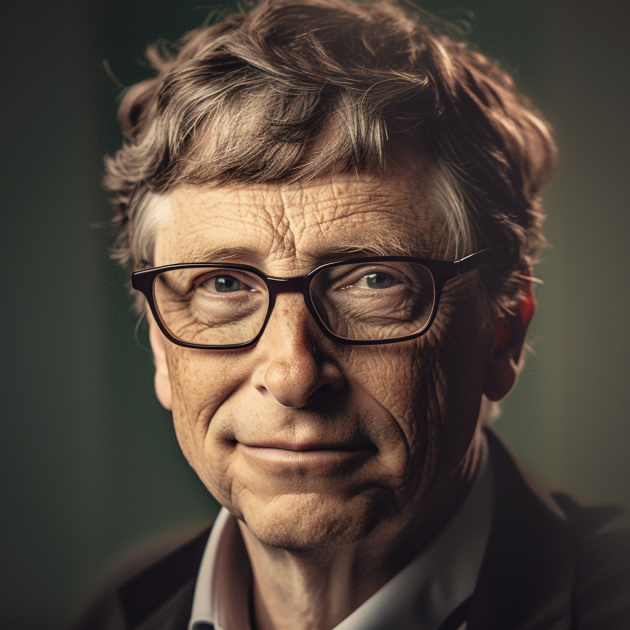
6. Bill Gates: Co-Founder of Microsoft
Background and History
Bill Gates, born in 1955 in Seattle, Washington, is a renowned entrepreneur, philanthropist, and co-founder of Microsoft Corporation. Gates attended Harvard University, where he studied mathematics and computer science, but dropped out in 1975 to co-found Microsoft with Paul Allen.
Under Gates’s leadership, Microsoft became a dominant player in the personal computer software industry, paving the way for widespread technology adoption.
Gates stepped down as Microsoft CEO in 2000. In 2014, he stepped down as Chairman but continued to serve as a technical advisor to Microsoft’s CEO, Satya Nadella.
Gates now focuses on philanthropy through the Bill & Melinda Gates Foundation, which aims to improve global health and education and reduce poverty.
Microsoft’s AI Integration: Fostering Innovation
Microsoft has been integrating AI technologies into its products and services throughout its history. Under Gates’s guidance and vision, Microsoft has pioneered AI and machine learning development. Some key AI-driven advancements within Microsoft include:
- Cortana: Microsoft’s AI-powered voice assistant, Cortana, allows users to access information, control smart devices, and interact with various services using voice commands.
- Azure Machine Learning: Microsoft’s Azure Machine Learning platform enables developers and data scientists to create, deploy, and manage machine learning models in the cloud.
- AI for Accessibility: Microsoft’s AI for Accessibility initiative harnesses the power of AI to amplify human capabilities for over 1 billion people with disabilities around the world.
Bill Gates’s Thoughts on AI: Quotes and Predictions
Bill Gates has strongly advocated for the responsible development and adoption of AI technologies. He believes AI can significantly improve various aspects of human life. Here are some notable quotes and predictions from Gates:
- “The dream is finally arriving. This is what it was all leading up to.”
- “AI is just the latest technologies that allow us to produce many more goods and services with less labor. And overwhelmingly, over the last several hundred years, that has been great for society.”
- “AI can be our friend. It can help us get educated, be more efficient, and help us create new tools that empower us.”
Gates envisions a future where AI technologies improve human lives, foster innovation, and enable new growth opportunities. As the co-founder of Microsoft and a leading voice in the technology industry, Gates’s influence on AI development and adoption is undeniable.
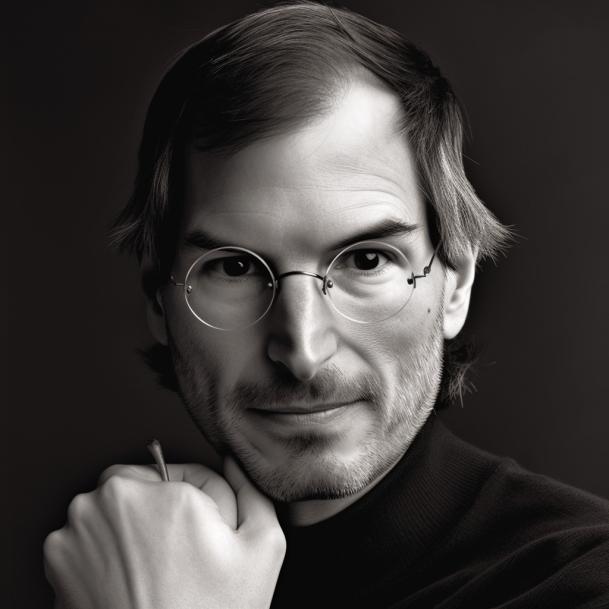
7. Steve Jobs and Steve Wozniak – Cofounders of Apple

Background and History
Steve Jobs (1955-2011) and Steve Wozniak, born in 1950, were the co-founders of Apple Inc., a company that revolutionized personal computing, mobile devices, and digital media. Jobs, an innovative entrepreneur and visionary, served as Apple’s CEO and public face.
Wozniak, an engineer and computer programmer, focused on the technical aspects of the company’s products.
In 1976, Jobs and Wozniak founded Apple in a California garage and introduced the Apple I, their first personal computer. In 1977, they released the Apple II, which became a huge success and popularized personal computing. Under their leadership, Apple continued to innovate and expand its product offerings, including the Macintosh, iPod, iPhone, and iPad.
Apple’s Early AI Integration: Pioneering Innovations
Though AI technologies were less advanced during Jobs and Wozniak’s time at Apple, the company laid the groundwork for future AI integration. Apple’s early products were designed to be user-friendly and intuitive, a philosophy that would later drive the development of AI-powered features.
Under Jobs’ guidance, Apple introduced products like Newton, an early personal digital assistant with handwriting recognition capabilities, and the Macintosh computer with voice recognition software, which widened pioneering technologies in the 1990s.
Steve Jobs and Steve Wozniak’s Thoughts on AI: Quotes and Insights
While Jobs and Wozniak did not extensively discuss AI in the same manner as contemporary tech leaders, they both shared a vision of the transformative potential of technology.
Steve Jobs once said, “I think one day we will look back and wonder how we ever got along without computers that could think.” This quote reflects Jobs’s belief in the potential of technology to augment human capabilities and improve our lives.
On the other hand, Steve Wozniak expressed concerns about AI’s future. In a 2015 interview, he stated, “Computers are going to take over from humans, no question.” However, while Wozniak acknowledged the benefits of AI, he also cautioned about the potential consequences of unchecked development.
As the co-founders of Apple, Steve Jobs and Steve Wozniak played significant roles in shaping the future of personal computing and, by extension, AI development. Their vision and innovative spirit continue to inspire today’s technology leaders as they explore the potential of AI to transform industries and improve human lives.
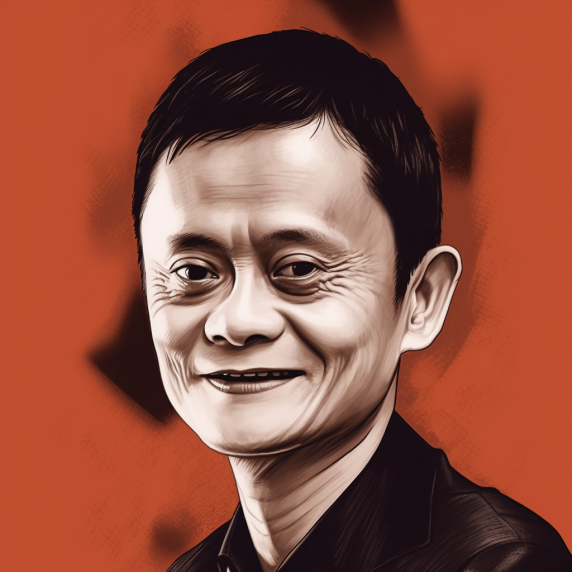
8. Jack Ma – Founder of Alibaba
Background and History
Jack Ma, born in 1964 in Hangzhou, China, is the co-founder and former executive chairman of Alibaba Group, a multinational conglomerate specializing in e-commerce, retail, and technology.
Ma, a former English teacher, founded Alibaba in 1999 with 17 friends, aiming to create a platform connecting Chinese manufacturers with global buyers.
Under Ma’s leadership, Alibaba has become one of the world’s largest e-commerce platforms, revolutionizing how businesses and consumers interact digitally. Ma stepped down as Alibaba’s executive chairman in 2019 but remained an influential and prominent global leader in technology.
Alibaba’s AI Integration: Driving Business Innovation
Under Jack Ma’s guidance, Alibaba has been actively integrating AI technologies into its products and services. Some key AI-driven advancements within Alibaba include:
- Customer service chatbots: Alibaba uses AI-powered chatbots to handle millions of customer inquiries daily, improving efficiency and reducing the need for human customer service agents.
- Personalized recommendations: Alibaba leverages AI and machine learning algorithms to provide personalized product recommendations to consumers, enhancing the user experience and driving sales.
- Smart logistics: Alibaba’s logistics subsidiary, Cainiao, utilizes AI and big data analysis to optimize delivery routes and warehouse management, improving efficiency and reducing costs.
Jack Ma’s Thoughts on AI: Quotes and Predictions
Jack Ma has expressed enthusiasm and concerns about the potential of AI technologies to reshape society and the global economy. Here are some notable quotes and predictions from Ma:
- “I think AI can help us understand humans better, not the other way around.
- “AI, big data is a threat to human beings. The AI and robots will kill many jobs because, in the future, these will be done by machines.”
- “We must teach our kids something unique so that a machine can never catch up with us. We should teach our kids to be more innovative and creative.”
Jack Ma envisions a future where AI technologies can improve human lives and drive innovation. However, he also emphasizes the need to prepare for the potential challenges posed by AI, such as job displacement, and the importance of fostering human creativity and adaptability.
9. Jensen Huang – Co-founder and CEO of NVIDIA
Background and History
Jensen Huang, born in 1963 in Tainan, Taiwan, is the co-founder, president, and CEO of NVIDIA, one of the most influential companies powering the modern AI revolution.
Huang earned a Bachelor’s degree in Electrical Engineering from Oregon State University and a Master’s degree from Stanford University. In 1993, he co-founded NVIDIA with Chris Malachowsky and Curtis Priem, initially focusing on graphics processing units (GPUs) for gaming and visualization.
Under Huang’s leadership, NVIDIA evolved far beyond graphics. The company’s GPUs became the backbone of modern artificial intelligence, enabling breakthroughs in deep learning, data centers, autonomous vehicles, robotics, and scientific research. Today, NVIDIA is widely regarded as the hardware engine behind global AI innovation.
NVIDIA’s Role in AI: Powering the Intelligence Layer
NVIDIA sits at the core of AI infrastructure, providing the computational power required to train and deploy advanced models. Key contributions include:
- GPUs for AI training: NVIDIA GPUs are the industry standard for training large language models, computer vision systems, and generative AI.
- CUDA platform: NVIDIA’s CUDA software platform allows developers to harness GPU power for AI, machine learning, and high-performance computing.
- AI supercomputing: NVIDIA builds AI-focused data center architectures used by cloud providers, research institutions, and enterprises worldwide.
- Autonomous systems: NVIDIA AI platforms support self-driving cars, robotics, and intelligent edge devices.
Without NVIDIA’s hardware and software ecosystem, many of today’s AI breakthroughs would not be possible at scale.
Jensen Huang’s Thoughts on AI: Quotes and Predictions
Jensen Huang consistently emphasizes that AI is a foundational technology, comparable to electricity or the internet in its long-term impact.
“Artificial intelligence is the new electricity.”
“Every industry will be transformed by AI, and it will be embedded in every product.”
“We are at the beginning of a new computing era, and AI will redefine how software is written and how computers are used.”
Huang envisions a future where AI accelerates scientific discovery, enhances productivity, and reshapes nearly every sector of the global economy. As the leader of NVIDIA, his influence extends across virtually all AI-driven industries, making him one of the most pivotal figures in the AI ecosystem today.
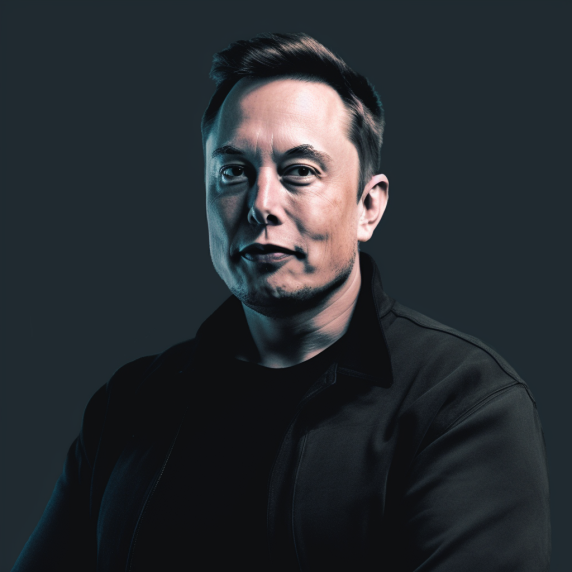
10. Elon Musk: Founder – of Tesla and SpaceX
Background and History
Elon Musk, born in 1971 in Pretoria, South Africa, is a prolific entrepreneur and CEO of multiple companies, including Tesla, SpaceX, Neuralink, and The Boring Company.
Musk attended Queen’s University in Canada before transferring to the University of Pennsylvania, earning degrees in economics and physics. In 1995, he enrolled at Stanford University to study applied physics but dropped out after two days to pursue his entrepreneurial ambitions.
Musk co-founded web software company Zip2, which was sold to Compaq in 1999. He then founded X.com, an online payment company that would later become PayPal, which was acquired by eBay in 2002. Since then, Musk has focused on advancing various industries, including electric vehicles, space exploration, sustainable energy, and AI.
Tesla and SpaceX: Harnessing AI to Drive Innovation
Musk’s companies, Tesla and SpaceX, both integrate AI technologies to achieve their goals:
- Tesla uses AI for its Autopilot feature, enabling semi-autonomous driving in its electric vehicles. The company also works towards fully autonomous vehicles using advanced machine learning algorithms and sensor data.
- AI plays a crucial role in SpaceX’s rocket guidance and control systems, allowing for precise navigation, landing, and reusability of rocket stages.
Elon Musk’s Thoughts on AI: Quotes and Predictions
Elon Musk has been a vocal advocate for the responsible development and regulation of AI technologies. While recognizing the potential benefits, Musk frequently warns of the potential risks associated with AI. Here are some notable quotes and predictions from Musk:
- “With artificial intelligence, we are summoning the demon. In all those stories where there’s the guy with the pentagram and the holy water, it’s like, yeah, he’s sure he can control the demon. Didn’t work out.”
- “AI doesn’t have to be evil to destroy humanity. If AI has a goal and humanity happens to be in the way, it will destroy humanity without even thinking about it. No hard feelings.”
- “We need to be very careful with artificial intelligence. So I’m increasingly inclined to think that there should be some regulatory oversight, maybe at the national and international level, to make sure that we don’t do something very foolish.”
Musk’s opinions on AI range from cautious optimism to genuine concern for humanity’s future. He stresses the importance of ethical considerations, research, and regulations to prevent potential negative consequences. As the CEO of multiple influential companies, Musk’s thoughts on AI significantly impact the technology industry and public discourse surrounding AI.
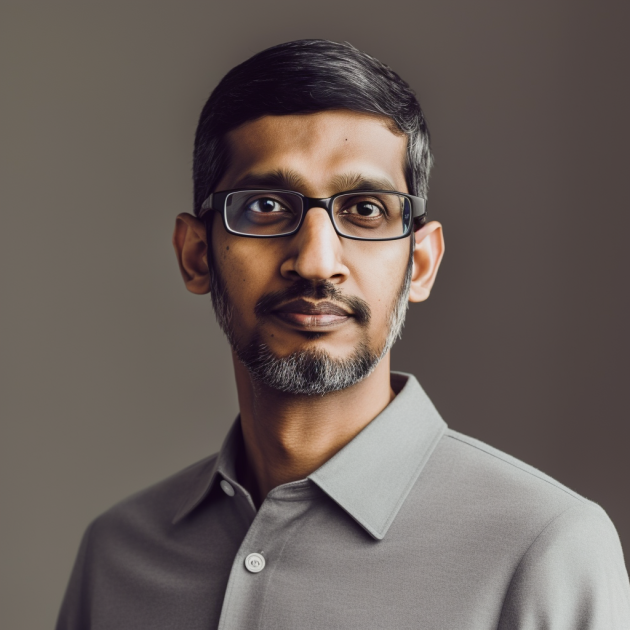
11. Sundar Pichai – CEO of Google
Background and History
Sundar Pichai, born in 1972 in Madurai, India, is the CEO of Google LLC and its parent company, Alphabet Inc.
Pichai earned a Bachelor of Technology degree in Metallurgical Engineering from the Indian Institute of Technology (IIT) Kharagpur, a Master’s degree in Materials Science and Engineering from Stanford University, and an MBA from the Wharton School of the University of Pennsylvania.
Pichai joined Google in 2004 and has since held various leadership positions, including overseeing the development of Google Chrome, Chrome OS, and Google Drive. He was appointed CEO of Google in 2015 and Alphabet in 2019.
Google’s AI Integration: Pioneering the AI Revolution
Under Pichai’s leadership, Google has been at the forefront of AI research and development, integrating AI technologies into various products and services:
- Google Search: Google’s search engine utilizes AI and machine learning algorithms to deliver relevant search results and provide personalized recommendations.
- Google Assistant: Google’s AI-powered voice assistant is designed to answer questions, perform tasks, and offer personalized recommendations for users on various devices.
- Google Translate: AI plays a crucial role in Google’s translation services, enabling real-time translations of text, images, and speech in multiple languages.
Sundar Pichai’s Thoughts on AI: Quotes and Predictions
Sundar Pichai has strongly advocated for the responsible and ethical development of AT technology. Here are some notable quotes and predictions from Pichai:
- “AI is one of the most important things humanity is working on. It’s more profound than electricity or fire.”
- “We must be clear-eyed about the risks of AI. It has the potential to introduce new vulnerabilities and exacerbate existing inequalities. Society must develop shared norms and ethical guardrails to guide this technology’s development and use.”
- “The most important thing is to ensure that AI benefits everyone and doesn’t harm humanity or concentrate power unduly.”
Pichai envisions a future where AI technologies can improve human lives, drive innovation, and address global challenges. However, he also emphasizes the importance of ethical considerations, research, and collaboration to prevent potential negative consequences. As the CEO of Google and Alphabet, Pichai’s thoughts on AI significantly impact the technology industry and the global AI landscape.
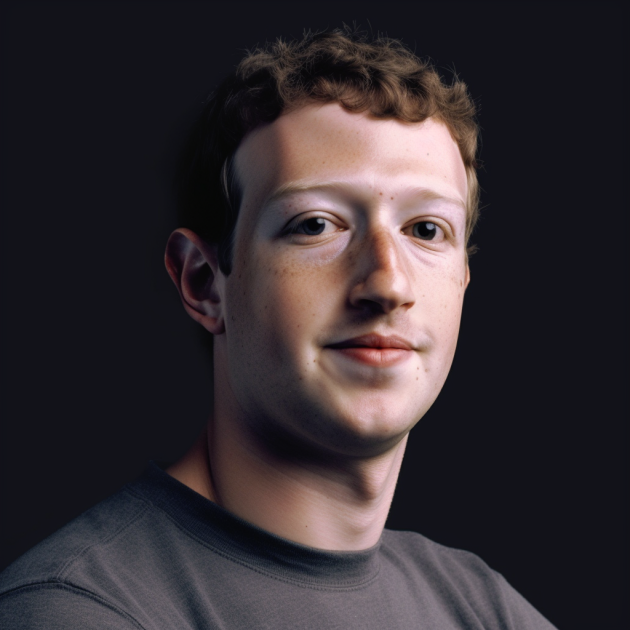
12. Mark Zuckerberg – Founder of Facebook
Background and History
Mark Zuckerberg, born in 1984 in White Plains, New York, is the co-founder, CEO, and chairman of Meta Platforms Inc., formerly known as Facebook Inc. Zuckerberg studied at Harvard University, where he launched “The Facebook” in 2004 as a social networking platform for fellow students.
The platform quickly gained popularity and expanded to other universities, eventually becoming the global social media giant known as Facebook.
Under Zuckerberg’s leadership, Facebook has become one of the world’s largest social media platforms, connecting billions of users and transforming how people communicate, share information, and interact online.
Facebook’s AI Integration: Powering the Social Media Experience
Facebook has been actively integrating AI technologies into its products and services under Zuckerberg’s guidance. Some key AI-driven advancements within Facebook include:
- Content moderation: Facebook uses AI-powered algorithms to detect and remove harmful or inappropriate content, helping maintain a safer online environment for users.
- Personalized recommendations: Facebook leverages AI and machine learning algorithms to provide personalized content recommendations, such as friend suggestions, targeted advertisements, and relevant news articles.
- Language translation: Facebook’s AI-powered translation services enable users to communicate across language barriers by translating text within posts and comments.
Mark Zuckerberg’s Thoughts on AI: Quotes and Predictions
Mark Zuckerberg has expressed enthusiasm for the potential of AI technologies to improve the user experience on Facebook and address various global challenges. Here are some notable quotes and predictions from Zuckerberg:
- “In the future, I think you’re going to be able to capture a thought or a concept and share that with the world, and that’s going to be an amazing breakthrough that will unlock so much human creativity, empathy, and understanding.”
- “One of the big questions for the next 10 years is: how can we use AI to help bring people closer together and build more empathy in the world?”
- “AI will be better at some things than humans, but it will still be our responsibility to ensure that it’s used ethically and in a way that truly benefits humanity.”
Zuckerberg envisions a future where AI technologies can enhance the social media experience, promote understanding and empathy, and help address global challenges. As the CEO and founder of Meta Platforms Inc., Zuckerberg’s influence on AI adoption and development within the company and across the technology industry is undeniable.
Takeaways
There you have it: some of the most influential innovators and AI leaders’ thoughts, quotes, and predictions on AI. As with any major topic, their opinions and perspectives vary, yet a few clear themes keep rising to the surface.
Let’s take a look at them:
The Pros
Not surprisingly, 90% of tech leaders worldwide believe that Artificial Intelligence will change the world for the better. However, that same 90% said we need to do it right and be cautious.
- “If AI can do most of the jobs better than humans can, we need to figure out a way to share those resources so everyone has a good life.” (Sam Altman)
- “It’s hard to overstate how big of an impact AI is going to have on society over the next 20 years.” (Jeff Bezos)
- “We think that AI is the most important thing happening in information technology, and we think it’s going to change everything.” (Larry Ellison)
- “AI is one of the most important things humanity is working on. It’s more profound than electricity or fire.” (Sundar Pichai)
The Cons
- The AI community needs to take AI safety seriously before it’s too late, but if we do that, I think we can make AGI safe.” (Sam Altman)
- “AI and big data are a threat to human beings. The AI and robots are going to kill a lot of jobs because, in the future, these will be done by machines.” (Jack Ma)
- “AI doesn’t have to be evil to destroy humanity. If AI has a goal and humanity happens to be in the way, it will destroy humanity without even thinking about it. No hard feelings.” (Elon Musk)
- “Computers are going to take over from humans, no question.” (Steve Wozniak)logy gets smarter.
How You Can Survive Amidst Rapid AI Adoption
Today, every individual and business feels a growing pressure to reinvent, adapt, and stay agile. The tide is rising fast, and you cannot afford to be swept away. Artificial intelligence is here, and how you respond to it will shape your relevance, resilience, and long-term security.
AI is transforming industries at a remarkable speed, but it is also arming cybercriminals with more sophisticated, automated attacks. Businesses that fail to harness the same level of intelligence and protection will be left exposed, overwhelmed, and outpaced.
You don’t have to face that alone.
This is where a trusted IT provider becomes essential. The right partner can help you navigate AI safely, strengthen your defenses, and leverage the technology in ways that actually move your business forward.
Consult with Imagine IT, a Service Provider with 25 Years of Experience
The threats we face today are vastly different from those of even a year ago, and they all share one unchanging trait: they keep evolving. With cybercrime rising and AI falling into the hands of bad actors, the risks have never been more serious. After 25 years in the industry, we know one thing for certain: AI is here to stay, and our commitment is to use it responsibly and positively to build stronger, smarter protection for our clients.
We help businesses across the Midwest take control of their AI revolution and use it as a powerful line of defense, not a weakness.
If you’re ready to strengthen your security and stay ahead of modern threats, we’re here to help.
FAQs
Q1. What are world leaders saying about AI?
Ans. Many of today’s top tech leaders believe AI will reshape every industry, unlocking breakthroughs in efficiency, creativity, and decision-making. Yet almost all of them emphasize that this power comes with responsibility, calling for thoughtful safeguards, ethical use, and global collaboration. Their perspectives vary, but they agree that AI’s trajectory will profoundly influence society’s future.
Q2. What is the public opinion on artificial intelligence?
Ans. Many people are excited about AI’s potential to streamline daily tasks, improve services, and accelerate innovation, while others worry about job disruption, security risks, and a lack of oversight. Overall, most individuals acknowledge its inevitability and feel the need to better understand and prepare for it.
Q3. What are 5the disadvantages of AI?
Ans. Five of the biggest concerns around AI include job loss due to automation, increased cybersecurity threats, ethical risks such as bias, the potential concentration of power in large tech companies, and fear of long-term impacts if systems evolve without proper regulation. These issues highlight why leaders stress the importance of responsible development. While AI offers immense benefits, its risks must be actively managed as the technology matures.