

“I am not really a technology person.”
It is one of the most common things I hear from smart, capable executives, and it is almost always said with a small, disarming smile. The person saying it runs a real business. They can read a Profit and Loss (P&L) statement in their sleep, spot a weak hire in one conversation, and feel a market shift before it shows up in the numbers. But put a technology decision in front of them and they wave it toward IT with something close to relief.
I understand the instinct. For most of the last few decades, technology was a back-office function. You bought the computers, kept the email running, and got on with the business. Delegating it entirely made sense, because it rarely touched strategy.
That world is gone. Technology is now where your risk, your data, and your competitive advantage live. A leader who opts out of understanding it is not staying above the details. They are handing away decisions that are theirs to own.
The answer is not to become a technologist. The answer is to know the right questions to ask.
You already do this everywhere else
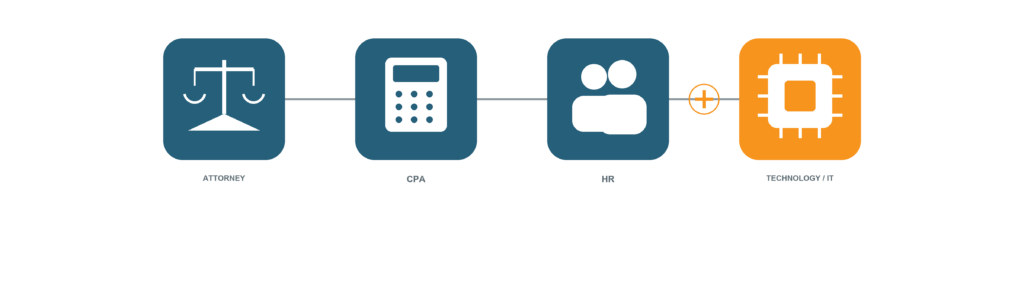
You already handle every other specialized part of your business this way:
- When there is a legal issue, you ask the attorney.
- When there is a tax question, you ask the Certified Public Accountant (CPA).
- When there is a difficult employee situation, you ask Human Resources (HR).
You did not go to law school, sit for the CPA exam, or memorize employment law. You are effective in those moments because you know the right questions to ask and the right people to ask them of.
That is what fluency is: knowing which questions matter, who owns them, and what a good answer sounds like. Nobody accepts “I am not a numbers person” from a chief executive. In the digital age, “I am not a technology person” is the same statement, and it should make us just as uncomfortable.
Why technology makes us feel dumb, and why we should not
Here is where good operators and real leaders separate.
Technology differs from law or tax in one way, and it is the reason good leaders freeze.
With legal, tax, and HR, you already know the questions exist. You have been asking “are we exposed here?” your whole career. With technology, you often do not know what question to ask.
Take a manufacturing company. Its leaders are fluent in their own domain. They will confidently ask about raw materials, about the Bill of Materials (BOM), about lead times, about their Third-Party Logistics (3PL) providers. Nobody feels dumb in those conversations, because they grew up asking those questions.
Put the same leaders in a technology review, and the questions that matter most often go unasked:
- Are employees using Shadow AI, artificial intelligence (AI) tools they adopt on their own without approval or oversight?
- Do we carry cyber insurance, and what does it require of us to stay covered?
- Do we enforce Multi-Factor Authentication (MFA), the second sign-in step beyond a password that stops most account break-ins?
When those questions do not get asked, leaders feel exposed, as if everyone else understands something they missed. The gap is not intelligence. No one handed you the technology question list the way experience handed you the manufacturing one. Knowing that Shadow AI, cyber insurance, and MFA are questions you are supposed to ask is the skill, and it is learnable.
Every senior leader, every C-level executive and every director, needs to know what to ask of their teams, their vendors, and their Subject-Matter Experts (SMEs). You will not have the answers, and you should not. But the questions have to be asked, the answers reviewed, and anything concerning escalated. That is the job.
You can delegate the work. You cannot delegate the ownership.
This is the line to carry out of this article.
Delegating the work is right and necessary. Delegating the ownership is where leaders get into trouble, because some outcomes land on the executive no matter who did the hands-on work.
Cybersecurity is the clearest example. When an organization suffers a breach, customers do not lose trust in the network administrator. They lose trust in the company, and the person who answers for it is the one at the top. The technical team owns the controls. The leader owns the consequence, so the leader has to own the question: are we protected, how do we know, and what is our exposure if we are wrong?
Good standards make good questions
You do not have to be a compliance expert to use the standards that already exist. Even when one does not legally apply to you, it is a ready-made list of the right questions, and strong leaders ask them anyway:
- The Securities and Exchange Commission (SEC) now requires public companies to disclose serious cyber incidents and describe how their board oversees cyber risk. Most of us are private and exempt, but the question stands: who on our leadership team owns cyber risk?
- HIPAA (Health Insurance Portability and Accountability Act) sets the bar for protecting health information. Even outside healthcare: how well do we protect our most sensitive data?
- CJIS (Criminal Justice Information Services) governs how criminal-justice data is handled. The underlying question travels: who can access our critical systems, and how is that controlled?
- NIST (National Institute of Standards and Technology) publishes the most widely used cybersecurity framework. You need not adopt every control to ask: would we pass an honest review against a recognized standard?
The point is not the regulation. Each one hands you a better question, and asking it is what leadership looks like.
The difference between an answer and a question
Here is the difference this whole idea turns on, using the topic every leader is wrestling with right now: AI.
You do not need to understand how a Large Language Model (LLM), the technology behind tools like ChatGPT and Microsoft Copilot, actually works. That is the answer side, and it belongs to your technical partners.
You need to know the question to ask: do we have an AI Governance Plan and an AI Use Policy in place?
Be honest with yourself. If you do not know whether you have them, the answer is no. And if you do have them, the next question matters just as much: are we measuring compliance, and doing it regularly? AI moves fast, and a policy written months ago and never revisited is not real governance.
You did not need to know anything about how the model works. You needed to know to ask whether the plans and policies exist, and whether anyone is checking. That is fluency.
It works the same way across every technology domain:
- On security: do we enforce MFA everywhere, and where are the exceptions? If we were breached tomorrow, how would we know?
- On data: when we put company information into an outside tool, where does it go and who can see it?
- On a new system: what business outcome is this supposed to move, and how will we measure it?
- On adoption: three months after go-live, how will we know whether people use this or work around it?
None of those are engineering questions. They are leadership questions, and each one keeps ownership where it belongs while sending the work to the people equipped to do it.
A fluency check: safe, stable, powerful
Here is a simple way to organize your questions on any technology decision, using the framework that runs through this series. Ask, in order, is it safe, is it stable, and is it powerful:
- Safe. Do I understand the risk, and am I comfortable owning it? What happens to our data, and what is our exposure if this is breached? If you cannot hold that conversation, you do not yet understand the decision well enough to make it.
- Stable. Will this work in our environment, day after day, without heroics? Is it documented, supportable, and integrated with what we already run, or does it depend on one person who happens to know how it works?
- Powerful. Is this connected to a real business outcome? What measure moves if it works, and how will we know?
If you can hold an honest conversation across those three, you are fluent enough to lead the decision, even if you could not implement a piece of it yourself. If you cannot, you have found exactly where to lean on your technical partners, and what to ask them. This is the same instinct behind the SATs of Successful Project Planning (https://imit.com/sats-of-successful-project-planning/): aim before you fire. Knowing the right questions is how a leader aims.
Use AI to find the questions
The leaders pulling ahead right now are using AI itself to figure out what to ask.
This is the most practical, lowest-risk way to start using AI as an executive, and it is worth doing this week. You are not asking the tool to make a decision. You are asking it for the question list you were never given, and for what good and bad answers sound like.
A few prompts you can adapt today with a tool like Microsoft Copilot or ChatGPT:
“I run a 200-person manufacturing company. List the ten questions I should ask my IT provider about our cybersecurity posture. For each, tell me what a strong answer sounds like and what a weak or evasive one sounds like.”
“We are about to buy a new Enterprise Resource Planning (ERP) system. Before we sign, what should I ask the vendor about data security, integration, and adoption?”
“Explain Shadow AI in plain business terms, and give me three questions to find out whether it is happening in our company.”
“Here is the answer my vendor gave me about our backups: [paste it]. What follow-up questions should I ask, and what might they be glossing over?”
That last one matters most. Astute leaders use AI to pressure-test the answers they get back from teams, vendors, and implementers. When a vendor gives you a smooth, confident response, a short conversation with an AI assistant can surface what they left out and what to ask next. You keep the judgment. The tool makes sure you walk in prepared.
One caution, which is itself a governance question: be careful what you type into these tools, especially anything confidential. That is exactly what your AI Use Policy should cover.
Leading people whose work you cannot do
Leading technical people can feel different from leading everyone else. How do you hold someone accountable for work you could not perform yourself?
The same way you always have. You do not manage a great salesperson by making the calls for them. You lead technical people by being clear about outcomes, asking sharp questions, protecting the time and resources they need, and staying close enough to know whether the work is moving.
When you fixate only on the giant outcome, the transformation or the platform, ownership gets murky and progress stalls. Break it into the connected, ordered pieces underneath it, the way we described in Domino Theory, and each piece gets an owner and a visible result. Leadership in the digital age is about creating the clarity, the accountability, and the questions that let the people with the answers succeed.
It also takes protected time to think, something we covered earlier in this series. You cannot lead technology strategy in the cracks between interruptions. Fluency is not a talent. It is a small, regular investment of attention that compounds like every other executive discipline.
Try this: the Digital Leadership Scorecard
Run this exercise on yourself and your leadership team:
- List the technology-dependent outcomes you own. Not the systems, the outcomes: customer trust, decision quality, operational continuity, competitive position.
- Score your fluency on each. Can you name the right questions and tell a strong answer from a weak one? Rate yourself green, yellow, or red.
- Name your gaps out loud. A red is a signal, not a failure. It shows where you are delegating ownership by accident.
- Assign a partner and a question, not a task. For each gap, name the person who can build your fluency and write down the specific question you need answered. If you are stuck, use AI to draft the list.
- Put a recurring block on the calendar. Fluency decays as fast as technology moves. Fifteen minutes a week beats a panicked all-day session after something breaks.
Keep the scorecard visible and revisit it every quarter.
The takeaway
The digital age did not ask leaders to become technologists. It asked them to stop treating technology as someone else’s responsibility.
You can delegate the work. You cannot delegate the ownership. The bridge between the two is not technical knowledge. It is knowing the right questions, knowing who to ask, and recognizing a good answer, exactly the way you already do with your attorney, your CPA, and your HR leader.
That single shift is what leadership in the digital age requires.