
TL;DR
- Traditional farming is unable to cater to rising global food demands.
- Smart farming solutions can deliver measurable outputs.
- Modern farmers use a range of innovative digital solutions to enhance agricultural efficiency. These solutions include:
- Data analytics/AI
- Mobile apps
- Blockchain
- Precision farming
- Digital marketplaces
- IoT sensors
- Cloud computing
- Digital transformation in agriculture follows four stages: digitize, optimize, transform, and adapt.
- Farmers often face barriers to adopting IoT, such as high technology costs, knowledge gaps, and limited rural IT support.
- Practical solutions include government subsidies, user-friendly interfaces, cooperative purchasing, mobile support units, and reliable IT services.
IT Support for the Agricultural Industry
The agricultural sector in the United States has evolved from small, isolated operations to expansive family-owned businesses that now play a vital role in both the national and global economy. Today, nearly 2 million farms shape America’s landscape, and as every industry undergoes metamorphosis in the 21st century, agriculture too must embrace modern technology and smart farming solutions. This shift is essential not only to meet rising demands but also to stay competitive in a particularly challenging market.
Modern farming is already making bold strides with new tools and techniques designed to boost productivity and efficiency. With so much at stake, more farmers are turning to IoT-driven innovations as the way forward.
Since every farmer seeks to save time and resources, there has never been a better moment to adopt smart, sustainable farming practices. This blog will break these down.
Also Read: The 9 Critical Steps To Migrate From An Outdated Legacy IT System
Impact of IT Services on Today’s Farming
IT services are reshaping agriculture with a stronger focus on sustainability. Farmers now benefit from higher yields and more efficient resource management through digital agriculture services. Here’s what you should know:
- About 68% of farmers worldwide use some form of precision farming, and 75% of them report higher crop yields.
- Nearly 65% of new farm equipment now comes with built-in digital tech.
- U.S. farms expect a 30% yearly growth in autonomous equipment use through 2025.
Mapping the Path to Digital Agriculture Transformation
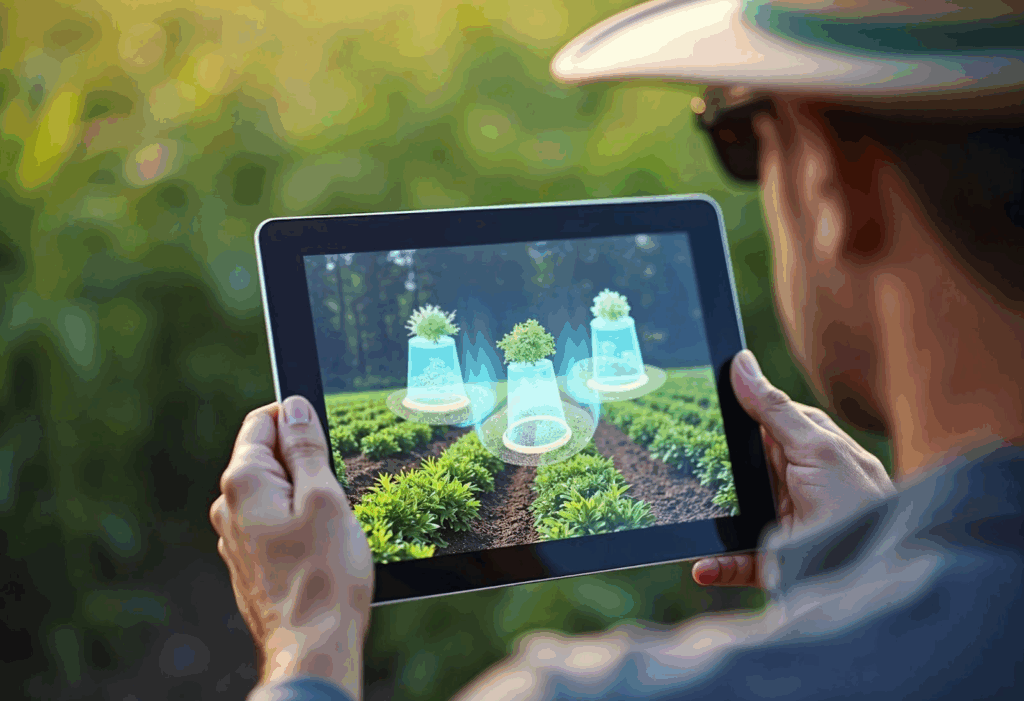
What does it take to achieve true digital transformation in farming? We’ve outlined the agricultural journey through a digital maturity continuum perspective:
Digitize
Managing all work on paper isn’t enough anymore. Digital tools now enable the tracking of finances, operations, and supply chains in one place. Smart systems also facilitate connections with external data, such as market information and lending rates.
Optimize
Digital maturity in farm management systems in the US is opening new opportunities at every stage.
In modern agriculture, GPS allows tractors and machinery to follow preset routes with pinpoint accuracy, helping farmers reduce overlap, save fuel, and make fieldwork more efficient. When combined with IoT-enabled sensors and smart farming tools, it becomes part of an interconnected system that drives sustainable agricultural practices.
Transform
This stage involves integrating agricultural data, sensors, weather information, and agronomic insights in one ecosystem to achieve true precision farming. This sustainable farming technology helps farmers make more informed decisions about fertilization, irrigation, and harvesting practices.
For example, soil sensors can indicate when and where moisture levels are low, allowing irrigation systems to deliver water only where it’s needed. Weather data can help predict the best window for planting or harvesting.
Adapt
Smart farming solutions are a continuous practice. Farmers are beginning to look beyond traditional seasonal harvests and are tapping into new revenue opportunities such as carbon credit marketplaces, where sustainable practices like reduced tillage or cover cropping can be monetized.
Emerging technologies are making this possible. Remote sensing provides real-time insights into crop health and field conditions. Blockchain ensures transparency and trust in supply chains.
Digital Solutions Every Modern Farmer Should Know
Here are some best practices in agriculture that every farmer should know:
1. Data Analytics & Artificial Intelligence
Agriculture data analytics play a key role in processing and analyzing large sets of data by using advanced analytical tools and techniques.
- Involves analyzing weather data, crop performance, soil information, etc.
- Use machine learning algorithms and predictive modeling to extract valuable insights.
- Applies valuable insights to improve yield predictions and optimize resource allocation.
2. Mobile Applications & ICT Platforms
The innovative use of mobile apps and ICT platforms gives farmers practical information about their crops.
- Get weather forecasts and market prices.
- Access crop management tips and pest/disease diagnostics.
- Make informed decisions to improve farm management systems.
3. Blockchain & Traceability Systems
Another prominent component of digital agriculture services marks the use of traceability systems and blockchain technology.
- Track produce from farm to market for food safety and quality.
- Secure, transparent transactions.
- Reduce intermediaries and support fair trading practices.
4. E-Commerce Platforms for Market Access
- Connect farmers directly with markets and buyers.
- Enable price discovery and market information access.
- Help farmers overcome barriers and expand opportunities.
E-commerce solutions and digital platforms are revolutionary advancements in smart farming.
5. IoT & Sensor Networks
IoT and sensor networks provide farmers with real-time field data.
- Track soil, weather, and crop growth remotely.
- Optimize resources with data-driven farm management.
6. Cloud Computing & Data Storage
Implementing cloud computing ensures scalable, secure, and cost-effective management of agricultural data.
- Store and share farm data safely on cloud platforms.
- Analyze large datasets for actionable insights.
Also Read: Ten Technologies (Inventions) That Have Changed The World
Challenges Farmers Face with IT & How to Solve Them
USDA research shows that 22.3% of rural Americans and 27.7% on tribal lands lack 25/3 Mbps broadband. Only 1.5% face this gap in urban areas. Here are some critical challenges that we’ve observed at Imagine IT when serving our clients in agriculture:
- Challenge: High Technology Costs
Modern tools can be expensive for farmers with limited capital.
Solutions: Equipment leasing, government subsidies, cooperative purchasing - Challenge: Skills & Knowledge Gap
Lack of training and age-related barriers slow adoption.
Solutions: Peer learning networks, simple interfaces, mentorship programs - Challenge: Limited Technical Support
Rural regions often lack reliable IT help.
Solutions: 24/7 remote support, local dealer networks, mobile service units
These challenges are real, but with the right smart farming solutions, farmers can overcome barriers, unlock long-term benefits, and remain open to growth opportunities.
Conclusions
The traditional agricultural sector is currently struggling to meet the world’s growing demands in various ways.
Farmers who are adopting smart farming solutions are experiencing impressive results. However, the transition from traditional to smart farming is not without its challenges. Traditional farmers encounter several barriers to entry, including inaccessible technology, a lack of support networks, and high upfront costs. Nevertheless, every challenge presents an opportunity for practical solutions, which can be found in a four-stage digital transformation journey for agriculture. The first step in this journey is to connect with a leading IT provider in the agricultural sector.
Imagine IT: Leading IT Services For Agriculture
As a leading provider of IT support services in the Midwest, Imagine IT’s team combines technical expertise with local knowledge to address the unique challenges farmers and homesteaders face. We work to help you optimize operations and move confidently into the next era of agriculture.
If you’ve noticed gaps in your processes, our technicians are here to help you bridge them. We provide dedicated IT support for agriculture in Sterling, Zeeland, Bloomington, Wichita, and Garden City.
FAQs
Q1. What digital solutions are most commonly used in smart farming?
Ans. Modern-day farmers are actively adopting precision agriculture technologies, digital platforms, and mobile phone applications, as well as comprehensive IT support services, through a leading provider in the agricultural domain.
Q2. How can technology improve crop yield and resource efficiency?
Ans. The systematic implementation of technology in agriculture can significantly enhance farming operations and output. For instance, the use of IoT sensors and networks in agricultural land can track soil, crop, and weather growth remotely.
Q3. What role does data analytics play in sustainable agriculture?
Ans. Agricultural data analysis enables farmers to make informed, real-time decisions. Farmers can employ advanced mechanisms to analyze large sets of agricultural data in real-time and plan operations. Data analytics also involves analyzing the precise application of water, fertilizers, and pesticides while preventing their overuse.